
Overview
- A military relocation professional (MRP) is a real estate agent certified through the National Association of Realtors to work with service members, veterans, and their families. They understand PCS timelines, VA loans, BAH, and base housing.
- An MRP costs you nothing extra. They earn the same commission as any other agent.
- Most service members stop there, and that’s the mistake. You can stack a realtor rebate on top of your MRP, which puts thousands back in your pocket at closing. ARC’s rebate has no cap and works with almost any agent you choose.
- If you’re taking a lump sum PPM payment, that rebate is what turns your relocation money into an actual down payment or closing-cost cushion.
- For the moving side, the free Agoyu app pulls quotes from pre-vetted movers in minutes instead of days of phone tag.
What is a military relocation professional?
A military relocation professional is a licensed real estate agent who has earned the MRP certification from the National Association of Realtors. The certification trains agents specifically on the military relocation process: how PCS orders work, what benefits service members are entitled to, how VA financing works, and why military moves run on timelines that would break a civilian transaction.
In plain terms, an MRP is a realtor who already speaks your language. You won’t spend the first three calls explaining what BAH is, why you can’t tour the house in person, or why your report date isn’t negotiable.
That matters more than it sounds. A PCS compresses a home purchase into weeks, often across time zones, sometimes sight unseen. An agent who has never worked a military move will treat your orders like a preference. An MRP treats them like the deadline they are.
What the MRP certification actually covers
Agents who earn the MRP go through coursework on:
- The mechanics of a military relocation and how orders drive housing decisions
- The rent-versus-buy and sell-versus-rent decision for a service member facing another move in two or three years
- VA loan basics, including eligibility, funding fees, and how VA financing differs from conventional
- The benefits and allowances that affect what you can actually afford
- Working within PCS timelines, including remote and virtual transactions
The certification is offered through NAR, and agents can look it up and enroll on their own. For you, the service member, the certification is a filter. It tells you the agent has done the homework before you walked in.
Military relocation professional designation vs. certification
You’ll see both words used, and the distinction is smaller than most articles make it sound.
The MRP is a certification. Certifications are focused credentials built around a specific skill set or client type. Designations are the heavier lift, requiring more coursework, more time, and usually ongoing membership in a professional council. Think of a designation as the longer academic track and a certification as focused professional training.
For your purposes, this is not worth losing sleep over. What you care about is whether the agent knows how military moves work and has done them before. Ask how many PCS transactions they’ve closed in the last year. That answer tells you more than the letters after their name.
What a military relocation professional actually does for you
The value shows up in specific moments, not in a general sense of expertise.
They read your orders correctly. Your report date, your authorized travel days, and your entitlements all shape what you can buy and when you have to close. An MRP builds the transaction backward from your report date.
They know VA financing cold. Zero down payment, no private mortgage insurance, the funding fee and who is exempt from it, and which sellers will actually accept a VA offer in a competitive market. A general agent may know VA loans exist. An MRP knows how to get one to the closing table.
They can run a transaction you’re not physically present for. Virtual tours, remote document signing, a trusted local set of eyes at the inspection. If you’re deployed or still at your losing installation, this is the whole ballgame.
They know which neighborhoods work. Commute to the gate, school districts that handle mid-year transfers well, areas with other military families, and where your BAH will actually stretch.
They understand the clock. Military moves happen fast, and hesitation costs you the house. An MRP has been through the compressed timeline before and won’t slow you down learning it on your dime.
They can point you to the rest of your team. Lenders who close VA loans on time, inspectors, and movers. Which brings us to the part almost nobody tells you about.
The part most service members miss: you can get cash back at closing
Here’s what the certification pages and the government resource pages will never tell you, because they can’t.
You can work with a military relocation professional and receive a rebate on the transaction. A realtor rebate returns a portion of the agent’s earned commission to you. It can be paid as cash after closing or applied directly to your closing costs.
This is not a discount you have to negotiate or a favor you have to ask for. It’s a program you register for before you start working with an agent.
Why this matters so much on a PCS
If you’re taking a lump sum for your relocation, whether that’s a PPM incentive payment, your dislocation allowance, or a combination of your PCS entitlements, that money hits your account and then immediately gets eaten by the move itself. Truck rental, fuel, deposits, temporary lodging, and the thousand small costs of landing somewhere new.
Then you get to the closing table on the home you’re buying, and closing costs land on you all at once.
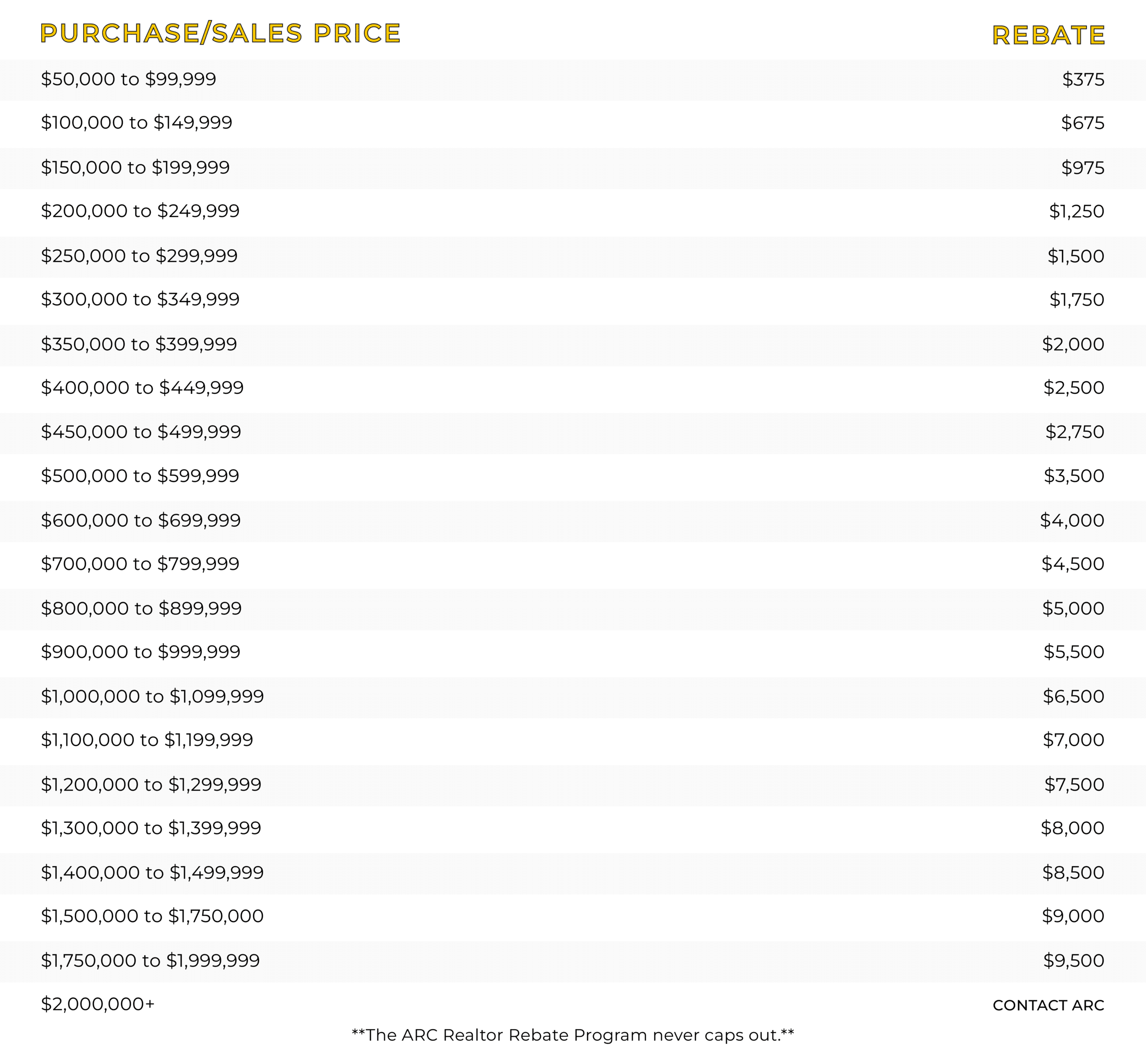
A rebate is the lever that changes this math. On a $400,000 home, the ARC rebate is $2,500. On a $600,000 home, it’s $4,000. That money can go straight against your closing costs, which means your relocation lump sum stays where it belongs: covering the move, or going into the house as a down payment.
You’ve earned the entitlement. The rebate is how you keep more of it.
Buying or Selling a Home?
Register Below for Your Cash Back Rebate Worth Thousands of Dollars After Closing!
(a benefit you are already entitled to)
Finding movers: use the free Agoyu app
The home is one half of your relocation. Getting your household goods there is the other, and it’s where most of the stress and most of the wasted money live.
The old way is calling six moving companies, waiting days for callbacks, getting three wildly different estimates, and having no idea which of them are actually vetted.
Agoyu is a free app that fixes this. It matches you with pre-vetted moving companies and returns fast, accurate quotes so you can compare real numbers side by side instead of guessing. If you’re doing a PPM and hiring help for part of the load, or hiring out the whole move, it’s the fastest way to find out what your move actually costs.
Pair it with our DITY move calculator to see what the government will pay you, then use Agoyu to see what the move will actually cost you. The gap between those two numbers is your profit.
How to find a military relocation professional
1. Start with ARC. We connect service members with realtors who specialize in military relocations, and we pair that with the rebate so you’re not choosing between a good agent and cash back. Contact ARC and we’ll match you with an agent near your new duty station.
2. Ask your network. Service members who recently PCSed to your gaining installation are the best source you have. They’ll tell you which agents actually returned calls.
3. Check the official directory. NAR maintains a searchable list of agents who hold the MRP certification.
4. Call your installation’s relocation office. The Relocation Assistance Program at your Military and Family Support Center is free and can point you toward local housing resources, though they can’t recommend a specific agent or offer you a rebate.
Questions to ask before you commit
- How many PCS transactions have you closed in the last 12 months?
- Have you closed a VA loan recently, and how did it go?
- Can you run this transaction if I can’t be there in person?
- Which neighborhoods near the installation would you steer a family like mine toward, and why?
- How fast do you respond, and what’s the best way to reach you across time zones?
Interview more than one. The first MRP you find is not automatically the right one.
Your PCS home buying timeline
As soon as you have orders. Register for your rebate, start talking to agents near the gaining installation, and get pre-approved for your VA loan. Pre-approval is what makes your offer credible when you’re buying from a thousand miles away.
60 to 90 days out. Lock in your agent. Start reviewing listings and neighborhoods remotely. Run your PCS weight allowance and decide whether you’re doing a PPM, a partial PPM, or a government move.
30 to 60 days out. Make offers. Get quotes from movers through Agoyu and book. If housing timing doesn’t line up, look at temporary housing options so you’re not scrambling on arrival.
Closing. Your rebate is calculated from the final sale price and paid out after closing, or applied to your closing costs.
Military relocation professionals: FAQs
Does a military relocation professional cost more than a regular agent?
No. An MRP earns the same commission structure as any other real estate agent, and commissions are negotiable in every case. You are not paying a premium for the certification. You’re getting military-specific expertise at the same price, which is why there’s little reason to use a general agent for a PCS.
Can I use a rebate and a military relocation professional at the same time?
Yes, and this is the combination most service members miss. Register for the rebate first, then work with your MRP through the transaction. Because ARC’s network is open, you can bring almost any agent you want and still collect. The one thing that disqualifies you is registering after you’re already under contract, so do it early.
Can veterans and retirees use an MRP?
Yes. The MRP certification covers veterans and separating service members, not just active duty. The knowledge that matters most, VA financing and the realities of a military-to-civilian transition, applies directly. If you’re making your final move on government orders, an MRP is arguably more useful, not less.
Is my realtor rebate taxable?
Rebates paid to a buyer are generally treated as a reduction in the purchase price of the home rather than as income, which is why they’re typically not taxed. That said, tax situations vary, and this is worth a conversation with a tax professional. Note that this is different from a PPM incentive payment, which is taxable income and has 22% withheld up front.
What if I’m renting instead of buying?
An MRP can still help you find a rental near the installation, negotiate a military clause into the lease, and find something that fits your BAH. You won’t get a rebate on a rental, but you’ll still get an agent who knows the area and understands why your lease needs an out if orders change.
Do I have to use a military relocation professional?
No. You can use any licensed agent you want. But a PCS is a compressed, high-stakes transaction with military-specific rules attached, and an MRP costs you nothing extra. Choosing a general agent means paying the same commission for less relevant expertise.
Put your PCS money where it belongs
A military relocation professional gets you into the right home on your timeline. A rebate keeps thousands of dollars of your own money in your pocket at closing. Agoyu gets your household goods there without a week of phone tag.
ARC brings all three together. We’ll match you with a realtor who knows military moves, register you for a rebate with no cap, and get you moving.
Call ARC at 866.697.3561 or contact us online today to get matched with a military relocation professional and start your rebate.
If you are planning on relocating, fill out the form below to claim your real estate rebate, and put $1,000’s of dollars back in your pocket.