Homes for Heroes vs. ARC Realtor Rebate

When you’re buying or selling a home, every dollar counts. That’s where real estate rebate programs come in—they give you cash back on one of life’s biggest purchases. Two popular options are the Homes for Heroes program and the ARC Realtor Rebate. Let’s break down how each works, what you’ll save, and which might be the better choice for your situation.

Homes for Heroes Rebate: How it Works

The Homes for Heroes program connects specific professionals with real estate agents and lenders who offer discounts on their services. If you’re a teacher, firefighter, healthcare worker, military member, or first responder, you qualify for their network.

Here’s the catch—you don’t get to pick your own agent. Homes for Heroes assigns you someone from their network based on your location. Sure, you can ask your current agent to join their program, but there’s no guarantee they’ll be accepted. Once you’re matched with an agent, you’ll work with them throughout your home buying or selling process.

The savings come as rebates after closing. For home purchases, you’ll get a check for 0.7% of your home’s purchase price. On a $300,000 home, that’s $2,100 back in your pocket. If you’re selling, you’ll receive a 25% discount on your agent’s commission at closing.

How to Apply

Getting started is straightforward—fill out a form on their website with your contact info and profession. A representative will call you within a day or two to verify your eligibility and match you with local agents. Remember, you need proof of your qualifying profession, like a work ID or pay stub.

Discounts Offered

Beyond the real estate agent rebate, you can stack savings by using other Homes for Heroes providers:

  • Lender fees: Average $500 rebate
  • Home inspection: Around $50 back
  • Title services: Varies by provider
  • Total average savings: $2,400 per transaction

The more services you use within their network, the more you save. Just keep in mind you’re limited to their approved providers.


ARC Realtor Rebate: How it Works

The ARC Realtor Rebate takes a different approach—and it’s open to everyone, not just certain professions. The best part? You can work with almost any realtor you want since ARC has a massive network of participating agents.

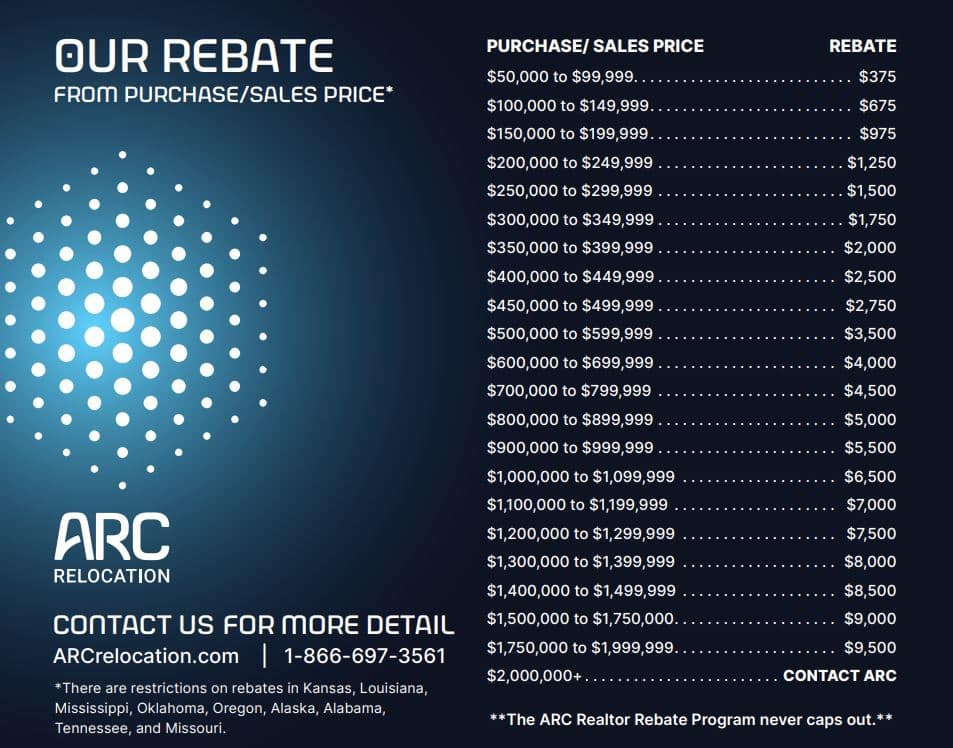
Your rebate amount depends on your home’s price, following a clear tier system. The higher your home’s value, the bigger your rebate. And unlike some programs, ARC’s rebates never cap out—even on multi-million dollar properties. One major perk is speed. While other programs might make you wait weeks for your rebate check, ARC promises a 2-day turnaround after closing. They’ll also match or beat any other rebate offer you find, giving you serious negotiating power.

How to Apply

Registration takes just a few minutes through the online form. You’ll provide basic info about your home search or sale, then ARC connects you with participating agents in your area. If you already have an agent in mind, they can likely work with them too—ARC’s network is that extensive.

Discounts Offered

ARC’s rebate structure is transparent and easy to understand:

  • $150,000-$199,999 home: $975 rebate
  • $300,000-$349,999 home: $1,750 rebate
  • $500,000-$599,999 home: $3,500 rebate
  • $1 million+ home: $6,500 and up

These amounts apply whether you’re buying or selling, and there’s no limit on the maximum rebate for luxury properties.


Why Choose the ARC Realtor Rebate

Several factors make the ARC Realtor Rebate stand out from the Homes for Heroes program and other competitors.

First, there’s the freedom to choose your agent. You’re not locked into working with whoever gets assigned to you—you can pick someone you trust, someone recommended by friends, or keep working with an agent you already know. This flexibility alone makes a huge difference in your home buying experience.

The rebate amounts often work out better with ARC too, especially for mid-range and higher-priced homes. While Homes for Heroes offers 0.7% back, ARC’s tiered system can deliver more cash on many transactions. Plus, the price-matching guarantee means you’ll never leave money on the table.

Speed matters when you’re dealing with moving expenses and closing costs. Getting your rebate in just two days instead of waiting weeks helps with cash flow during an already expensive time. Other rebate programs through large companies often involve bureaucratic delays—ARC keeps it simple and fast.

You also don’t need to prove you work in a specific field. Whether you’re an accountant, artist, or engineer, you qualify for the same rebates as everyone else. This inclusivity means more people can access meaningful savings on real estate transactions. Another advantage is transparency. Some rebate programs hide their rates or make you jump through hoops to find out what you’ll actually save—ARC publishes the entire rebate schedule upfront, so you know exactly what to expect before you even register.

The price-matching policy deserves special mention too. Found a better rebate offer elsewhere? ARC will match or beat it, period. This takes the guesswork out of shopping around for the best deal and ensures you’re getting maximum value.

Working with ARC also means avoiding restrictions found in other programs. Some rebate services limit you to specific real estate brands or franchises, while the Homes for Heroes program restricts eligibility to certain professions. ARC’s open network and inclusive approach mean more options and fewer headaches for you.

Register Today

Ready to save thousands on your next home purchase or sale? The ARC Realtor Rebate program makes it easy to get cash back without sacrificing quality or choice in your real estate transaction. Our combination of flexibility, speed, and competitive rebates sets them apart from programs like Homes for Heroes that come with more restrictions and requirements.

Don’t leave money on the table—register for the ARC Realtor Rebate today and see how much you can save. With an extensive network, fast payouts, and price-matching guarantee, you’re practically guaranteed to come out ahead. 

Feel free to reach out if you have any questions!

Military Home Loans: Eligibility and Options for Home Loan Programs

As a member of the military or a veteran, you’ve dedicated yourself to serving our country. Now it’s time to let your service work for you as you transition into the exciting world of homeownership. 

There are several unique home loan programs designed specifically for military personnel and veterans that can make your dream of owning a home a reality. Let’s explore some of the top options available to you.

ARC Military Realtor Rebate 

One standout program is the ARC Military Realtor Rebate. Here’s how it works: when you work with a participating real estate agent to buy a home, you’ll receive a cash rebate after closing based on the purchase price. The higher the price, the bigger your rebate – we’re talking potentially thousands of dollars back in your pocket.

What’s great is that ARC partners with a huge network of agents, so you have the freedom to choose the realtor you want to work with. They’ll help guide you through the process and ARC will take care of getting you that sweet rebate cash, usually within a couple days of closing. It’s a no-brainer way to save some serious money on your home purchase.

Fill out the form below to sign up for the ARC Military Realtor Rebate:

VA Home Loans 

If you meet the service requirements, a VA home loan is hands down one of the best ways to finance your home. Backed by the Department of Veterans Affairs, these loans come with significant benefits. For starters, you can often buy a home with zero down payment. Yep, you read that right – no need to spend years saving up for a hefty 20% down.

VA loans also tend to have super competitive interest rates and lower overall borrowing costs compared to conventional loans. Plus, there’s no private mortgage insurance required, which means lower monthly payments. And the cherry on top? You can use your VA loan benefit over and over again throughout your life as long as you meet the VA requirements. It’s a gift that keeps on giving.

Welcome Home Veteran Program 

For veterans and active duty military in Missouri, the Welcome Home Loan program is definitely worth checking out. It’s designed to help veterans and service members buy a home affordably in the Show-Me State.

Some highlights of the program include below-market interest rates, forgivable closing cost assistance up to $1,500, and up to 100% financing available. And if you’re a first-time homebuyer, or haven’t owned a home in the past 3 years, you can even combine the Welcome Home program with the Missouri First Place Loan program for additional assistance.

Veterans United Home Loans 

Veterans United is a lender that specializes in helping veterans and service members secure VA home loans. They’re known for their stellar customer service and support – they hold your hand through the entire process, from pre-approval to picking up your keys.

One unique thing about Veterans United is that they have a network of real estate agents, called Veterans United Realty, that specialize in working with military homebuyers. 

These agents understand the ins and outs of VA loans and the unique needs of veterans and service members. Working with a VU Realty agent and getting your VA loan through Veterans United can make for a seamless, stress-free experience.

Frequently Asked Questions About Military Home Loans 

Can you get a home loan in the military? 

Yes, active duty military members can absolutely get home loans, often with special benefits like no down payment, lower interest rates, and no mortgage insurance. VA loans are a popular option, but there are other programs like the Welcome Home Veteran program too.

Do military get better mortgage rates? 

In many cases, yes. VA loans backed by the Department of Veterans Affairs often have very competitive rates compared to conventional loans. Programs like the Welcome Home Loan in Missouri also offer below-market rates for veterans and service members.

What are the disadvantages of a VA loan? 

Overall, VA loans have significant advantages. But a couple potential drawbacks are the VA funding fee (though this can be rolled into the loan amount) and the fact that not all sellers will accept VA loan offers because of extra requirements. However, benefits like $0 down, low rates, and no mortgage insurance usually far outweigh the cons.

va loan button

Final Thoughts 

As a veteran or service member, you have access to some phenomenal home loan programs that can make homeownership more affordable and accessible. Between VA loans, state-specific programs like Welcome Home Veteran, lender-specific options like Veterans United, and money-saving opportunities like the ARC rebate, you’ve got lots of great paths to explore.

Take some time to research the eligibility requirements and benefits of each, and don’t hesitate to reach out to lenders and realtors who specialize in working with military homebuyers. With the right program and team in your corner, you’ll be unlocking the front door of your new home in no time. Happy house hunting!

Real Estate Agent Commission Settlement Changes Policies That Have Been Set in Place For Decades

The real estate industry is on the cusp of a seismic shift that has been decades in the making, as a 6% commission in home purchase transactions no longer exists.

A landmark settlement between the National Association of Realtors (NAR), which represents 1 million realtors, and home sellers is set to dismantle long-standing policies that have been accused of artificially inflating agent commissions. The real estate agent commission settlement has far-reaching implications for home buyers, sellers, and the real estate professionals themselves, ushering in a new era of transparency and competition within the industry.

What is the National Association of Realtors Lawsuit?

At the heart of this legal battle is the NAR, a powerful trade group that has long governed the rules and regulations for real estate agents across the United States. 

For years, the NAR has faced scrutiny and multiple realtor lawsuits from home sellers who claimed that its policies regarding listings on the Multiple Listing Service (MLS) have unfairly propped up agent commissions. The issue lies in the NAR’s requirement that brokers advertising a home for sale on the MLS offer upfront compensation to a buyer’s agent. 

This practice, which has been in place since the 1990s, has been heavily criticized for stifling competition and forcing home sellers to pay inflated commissions to both their agent and the buyer’s agent.

How Will It Impact Real Estate Commissions?

In a sweeping move to resolve these lawsuits, the NAR has agreed to pay $418 million to compensate home sellers across the United States. However, the real game-changer is the organization’s decision to abolish the policies that have been at the center of the controversy.

Under the terms of the settlement, the NAR will no longer require brokers to offer upfront compensation to a buyer’s agent when advertising a home for sale on the MLS. 

Instead, individual home sellers will have the opportunity to negotiate such offers with a buyer’s agent outside of the MLS platforms. This shift in policy opens the door for increased competition and the potential for significant reductions in agent commissions.

Real Estate Commission Settlement Could Lead to Lower Home Buying Costs

Currently, the standard commission rate for real estate agents is typically in the range of 5% to 6% of the home’s sale price, with this cost being borne by the seller. With the new rules for buying and selling homes, analysts predict that agent commissions could drop by as much as 30%.

For example, if you’re selling a $1 million home under the current system, you could expect to pay approximately $60,000 in agent fees. However, with a 30% reduction in commissions, that same home sale could result in a savings of $18,000, with the total commission dropping to around $42,000.

This potential for substantial cost savings is not only beneficial for home sellers but could also make homeownership more accessible for prospective buyers. With lower agent fees factored into the overall cost of purchasing a home, many individuals who were previously priced out of the market may find themselves in a more favorable position to enter the housing market.

How This Can Impact the Housing Market

The implications of this realtors commission settlement on the broader housing market are multifaceted and complex. While predictions vary, there are several potential scenarios to consider.

On one hand, the prospect of lower commission rates could spur increased activity in the housing market. With the reduced costs associated with buying and selling homes, there may be an influx of new buyers entering the market trying to save money on a mortgage, driving up demand and potentially leading to an increase in home prices in certain areas.

With an increase in home prices, ARC Relocation’s Realtor Rebate can be useful to help save thousands on costs associated with buying or selling your home.

Conversely, some experts believe that the lower commissions could actually result in a decrease in home prices across the board. The reasoning behind this theory is that if sellers are paying less in realtor fee changes, they may be more inclined to accept lower offers on their homes, thereby driving down overall pricing. This is ideal for anyone purchasing their first home.

Regardless of the ultimate impact on home prices, one certainty is that the real estate industry as a whole will undergo a significant transformation. Real estate agents and brokers will need to adapt their business models and pricing strategies to remain competitive in a landscape where commissions are no longer fixed.

NAR Realtors Have Had Trouble For Years

It is important to note that the NAR’s legal troubles and scrutiny over its practices extend far beyond the recent settlement. For years, the organization has faced antitrust allegations and leadership turmoil, casting doubt on its ability to maintain a firm grip on the industry.

In November 2023, a federal jury in Missouri found the NAR and several large brokerages liable for a staggering $1.8 billion in damages for conspiring to keep agent commissions artificially high. 

Since it was an antitrust case, the NAR could have been on the hook for triple the damages, which is $5.4 billion.

This verdict, coupled with the potential for treble damages, served as a major blow to the NAR’s credibility and prompted the organization to seek a real estate agent commission settlement. Furthermore, the NAR has been plagued by leadership chaos over the past year, with multiple high-profile resignations and allegations of misconduct among its top executives. 

This instability has only added to the organization’s woes and may have contributed to its decision to seek a resolution to the ongoing legal battles.

Final Thoughts

The real estate industry is undoubtedly on the precipice of a transformative period with the recent NAR class action lawsuit update.

For home sellers, the potential for significant cost savings is a welcome development, allowing them to retain a larger portion of their home’s value. Prospective buyers, on the other hand, may find homeownership more attainable as the overall costs associated with purchasing a property become more affordable.

Real estate professionals, however, will need to adapt quickly to the changing landscape. In the end, the real estate agent commission settlement represents a pivotal moment for an industry that has long been resistant to change.

What Is a Mortgage Rebate? How a Mortgage Rebate Works

Buying a home is a massive financial commitment, and every little bit of savings counts. That’s where a mortgage rebate (also known as a lender rebate or rebate loan) can come in handy. 

It’s a way for you to get some cash back when you take out a mortgage loan. With housing costs continuously on the rise, an opportunity like a mortgage cashback is a great way to save money and reduce expenses.

Are you trying to save thousands on the purchase of your new home? Register for the ARC Realtor Rebate program and save tons of money on closing costs!

What Is a Mortgage Rebate?

A mortgage rebate is a cash rebate or credit that a lender offers to a borrower as an incentive for taking out a mortgage loan with them. It’s essentially a discount on the loan, which can help offset some of the closing costs or other expenses associated with buying a home, like saving money on your down payment

Mortgage rebates are sometimes offered by lenders as a way to attract more borrowers and stay competitive in the mortgage market.

How Does a Mortgage Rebate Work?

When you apply for a mortgage, the lender may offer you a rebate as a way to entice you to choose their loan product. The rebate amount is typically a percentage of the total loan amount, and it’s credited to you at closing. 

For example, if you’re taking out a $300,000 mortgage and the lender offers a 1% rebate, you’d receive $3,000 back at closing.

It’s important to note that while a mortgage rebate can save you money upfront, it may also come with a slightly higher interest rate or other fees attached to the loan. 

Lenders need to make up for the cost of the rebate somewhere, so it’s not entirely free money. However, in many cases, the overall savings from the rebate can still make it a worthwhile option.

What Is an Example of a Mortgage Rebate?

Let’s say you’re buying a $400,000 home with a 20% down payment ($80,000). Your mortgage amount would be $320,000. If the lender offers a 1.5% rebate, you’d get $4,800 back at closing (1.5% of $320,000). That’s a nice chunk of change that could go towards closing costs, moving expenses, or even just padding your bank account.

Imagine being able to put that $4,800 towards your moving costs, or using it to buy some new furniture for your new home. It could also serve as a buffer in case of any unexpected expenses that pop up during the moving process. Every little bit of extra cash can make a significant difference when you’re dealing with the financial strain of a home purchase.

Why Is a Mortgage Rebate Helpful?

A mortgage rebate can be super helpful for a few reasons:

  • It reduces your upfront costs when buying a home, which is always a plus when you’re dealing with a major purchase like this. Closing costs alone can easily run into the thousands of dollars, so any way to offset those expenses is beneficial.
  • It can help offset closing costs, which can include things like appraisal fees, title insurance, and other miscellaneous charges.
  • It gives you a little extra cash to work with, which can come in handy for things like hiring movers, buying new furniture, or just having a financial cushion. The costs associated with moving and settling into a new home can add up quickly, so having that extra cushion can provide peace of mind.
  • It can help make your monthly mortgage payments more affordable, especially in the early years when a larger portion of your payment goes towards interest.
  • It can make homeownership more accessible for first-time buyers or those with limited budgets.

While a mortgage rebate may not seem like a game-changing amount of money, every little bit of savings can make a difference when you’re taking on such a significant financial responsibility.

Alternatives to a Mortgage Rebate

While a mortgage rebate is a great way to save some money, it’s not the only option out there. Another option to consider is the ARC Relocation realtor rebate program. With this program, you can receive a cash rebate from your realtor after your home purchase is complete. 

The rebate amount is based on a percentage of the sale price, so the higher the home’s value, the bigger the rebate you’ll receive. It’s a great way to save thousands of dollars on closing costs and other expenses.

The ARC Relocation rebate program is especially beneficial for those who are relocating for work or other reasons, as it can help offset some of the additional costs associated with a long-distance move. Plus, working with a realtor who is familiar with the relocation process can make the entire experience smoother and less stressful.

It’s a great alternative to the Community Heroes Rebate Program too, which can also help you save money when purchasing or selling your home. This is specifically for those who serve their communities, like firefighters, military members, healthcare workers, EMS workers, or those who work in law enforcement. 

Mortgage Rebate: FAQs

Are mortgage rebates taxable?

In most cases, yes. The rebate is generally considered taxable income, so you’ll need to report it on your tax return. However, it’s always a good idea to consult with a tax professional to understand the specific implications for your situation.

Do all lenders offer mortgage rebates?

No, not all lenders offer rebates. It’s typically up to the individual lender’s discretion, and some may use it as a promotional tool or a way to stay competitive in the market.

Can I negotiate for a higher rebate?

It’s worth asking, but the lender may or may not be willing to increase the rebate amount. They’ll likely have set guidelines and criteria for the rebate offers.

Are there any restrictions or requirements for receiving a mortgage rebate?

Yes, there may be certain criteria you need to meet, such as a minimum credit score, down payment amount, or debt-to-income ratio.

Can I use the rebate for anything, or are there limitations?

In most cases, you can use the rebate however you’d like, but it’s always a good idea to clarify with your lender. Some lenders may require that the rebate be applied towards closing costs or other specific expenses.

Final Thoughts

A mortgage rebate can be a nice little bonus when you’re taking out a home loan. It’s essentially free money that can help offset some of the costs associated with buying a home. 

Don’t forget to explore other options too, like the ARC Relocation realtor rebate program, which can potentially save you even more money in the long run.

Taking advantage of programs and loan incentives like mortgage rebates or realtor rebates can make the home buying process a little less daunting and help you keep more of your hard-earned money in your pocket.

If you want to save as much money as possible on your home purchase, register today for ARC Relocation’s Realtor Rebate Program

How to Save Up For a House: Planning to Purchase Your Future Home

Purchasing a home is a significant milestone in many people’s lives, but the prospect of saving for a down payment can be daunting. However, with careful planning and disciplined saving habits, you can turn this dream into a reality. 

In this comprehensive guide, we will explore effective strategies to help you save for a house down payment. By following these steps on how to save up for a house, you’ll be well on your way to owning your dream home.

How to Save For a Down Payment: How Much Do You Need to Save?

Before you embark on your savings journey, it’s crucial to determine how much you need to save for a down payment. This will depend on several factors, including the purchase price of the home, the mortgage loan’s terms, and the down payment percentage required by lenders. 

It’s generally recommended to aim for a down payment of 20% of the home’s purchase price to avoid private mortgage insurance (PMI). 

However, depending on your circumstances, you may be able to secure a mortgage with a lower down payment. It’s essential to evaluate your financial situation, consult with lenders, and understand your options. 

By calculating your target down payment amount accurately, you can establish a clear savings goal.

How Long Should You Plan to Save?

Once you have a clear understanding of the amount you need to save, it’s time to establish a timeline. Saving for a house is a long-term goal, and it’s important to set realistic expectations when learning how to save money for a down payment. 

Assess your current financial situation, including your income, expenses, and debt obligations. Analyzing your monthly cash flow will give you an idea of how much you can save each month. 

Here is a table that breaks down how much you can save based on the amount you save and time you have:

Savings Amount per Month Years to Save Total Savings Amount
$25 5 $1,500
$100 5 $6,000
$250 5 $15,000
$500 5 $30,000
$750 5 $45,000
$1,000 5 $60,000
$25 10 $3,000
$100 10 $12,000
$250 10 $30,000
$500 10 $60,000
$750 10 $90,000
$1,000 10 $120,000


Consider the desired timeline for homeownership and how it aligns with your financial goals. Understanding the relationship between time and savings will help you set achievable milestones and track your progress. 

Additionally, keep in mind that the longer you save, the more time you have to take advantage of potential market appreciation and interest on your savings.

8 Ways How to Save Up For a House

Here are eight of the most popular ways to start stacking more change for that big down payment: 

1. Create a Budget

Implementing a budget is the foundation of effective savings. Start by tracking your income and expenses to get a clear picture of your financial situation. Categorize your expenses and identify areas where you can reduce spending.

Look for opportunities to trim unnecessary costs such as dining out, entertainment subscriptions, or impulse purchases. 

By having a comprehensive overview of your finances, you can make informed decisions on where to allocate funds towards your down payment savings. Use tools like Mint or Rocket Money to help you track all of your personal spending and savings. 

2. Reduce Unnecessary Expenses

While it might seem obvious, you probably need to spend less if you want to save more. In addition to creating a budget, it’s important to scrutinize your expenses and identify areas where you can make significant cuts. 

Evaluate your monthly bills and look for alternatives to reduce costs. Consider negotiating lower interest rates on credit cards or refinancing high-interest loans. Explore options for lowering utility bills by adopting energy-saving habits or switching to more efficient appliances. 

Every dollar you save on unnecessary expenses can be directed towards your down payment fund.

3. Increase Your Income

For some of us, we can’t sacrifice the things we love and if that’s the case for you, you’re going to have to find a way to make more money if you want to buy a house. Boosting your income is a powerful way to accelerate your savings progress. 

Explore opportunities to increase your earnings, such as taking on a side hustle or freelancing.

Consider leveraging your skills or hobbies to generate additional income. Additionally, you can explore the possibility of negotiating a raise or promotion at your current job. Alternatively, investing in your education or acquiring new certifications can open doors to higher-paying opportunities in your field.

4. Automate Your Savings

When working on how to save up for a house, setting up automated savings is an effective way to ensure consistent contributions to your down payment fund. 

Open a separate savings account dedicated solely to your down payment savings. Speak with your bank or financial institution to establish automatic transfers from your checking account to your savings account. 

This “set it and forget it” approach eliminates the temptation to spend the money and ensures that a portion of your income is consistently directed towards your down payment goal. By automating your savings, you’ll make saving a habit without the need for constant manual transfers.

5. Cut Housing Costs

Housing expenses typically account for a significant portion of one’s monthly budget. Consider ways to reduce your housing costs to free up more money for your down payment savings. One option is to downsize your current living situation. 

Assess whether you can comfortably live in a smaller space or explore affordable housing alternatives. 

Additionally, consider finding a roommate to share rent and utility costs. Splitting expenses can significantly reduce the financial burden and accelerate your savings progress.

6. Save Windfalls

Take advantage of unexpected windfalls and channel them directly into your down payment fund. This can include tax refunds, work bonuses, or monetary gifts from family and friends. 

Instead of treating windfalls as disposable income, view them as an opportunity to make substantial contributions to your savings. 

By resisting the urge to splurge and redirecting these unexpected funds towards your down payment, you’ll make significant strides towards achieving your homeownership goal.

7. Get a Realtor Rebate

When purchasing a home, consider leveraging a realtor rebate program to save money on your real estate purchase. 

A realtor rebate is a cash incentive provided by a real estate agent or brokerage to buyers at closing. This rebate is typically a percentage of the agent’s commission and can be a substantial amount. 

By working with a realtor who offers a rebate program, you can receive a portion of the commission as a cash-back rebate, which can be directed towards your down payment. 

At ARC Relocation, we offer a realtor rebate that beats the competition. Our rebates are higher, we have a large realtor network, and we’ll match any rebate you find! Click here to register today

8. Explore Down Payment Assistance Programs

When working on how to get a down payment for a house, there are many local, state, and federal programs that provide down payment assistance to eligible homebuyers. These programs offer grants, loans, or tax credits to help individuals and families overcome the hurdle of saving for a home. 

Research available down payment assistance programs in your area and determine whether you meet the requirements. The application process may involve income verification, attending homebuyer education courses, or meeting specific criteria. By leveraging these programs, you can significantly reduce the amount you need to save on your own.

How to Save For a Down Payment On a House: FAQs

How long will it take to save for a down payment?

The timeline for saving for a down payment can vary significantly depending on factors like your income, savings rate, target down payment amount, and more. Generally, it takes most people 3-5 years to save enough for a 20% down payment. The more you can dedicate to savings each month, the faster you’ll reach your goal.

What percentage down payment do I need?

While 20% is recommended to avoid paying for private mortgage insurance (PMI), you can get a mortgage with as little as 3% down. However, the lower your down payment, the more fees and higher interest rates you’ll typically pay over the life of the loan.

Are there any programs to help with my down payment?

Yes! There are various down payment assistance programs and relocation loans available at the state, local, and national level that provide grants, forgivable loans, or tax credits to eligible homebuyers. Your income, credit, and other personal factors determine qualification. Reach out to your state and local housing authority to learn about opportunities for down payment help in your area.

Should I save for a down payment or pay down debts first?

It’s generally wise to pay down high-interest debts before dedicating all extra funds to a down payment savings account. This helps improve your credit score and debt-to-income ratio so you can qualify for better mortgage rates. Once high-interest debts are paid off, focus on saving aggressively for your down payment goal.

Final Thoughts

Learning how to save up for a house requires discipline, patience, and commitment. It may seem like a daunting task, but with the right strategies and a clear plan, you can achieve your goal. Remember that saving for a down payment is a long-term endeavor, and it’s essential to stay focused and motivated along the way.

Start by calculating your target down payment amount and establishing a realistic timeline based on your financial situation. 

Implement the strategies mentioned in this guide, such as creating a budget, reducing unnecessary expenses, increasing your income, automating savings, cutting housing costs, saving windfalls, exploring realtor rebate programs, and researching down payment assistance programs.

If you want to save the maximum amount of money on your home purchase, register now for the ARC Realtor Rebate program

Moving Assistance Programs: What Are They and How Do You Qualify?

When planning to move, it is common to feel stressed and excited. There are many steps involved in the moving process, such as packing up all of your belongings, scheduling your move, finding a new home, and budgeting to prepare for all moving expenses. 

Moving assistance programs can help take some of the financial burdens off of you throughout your move, as they can provide you with rebates to help pay for your closing costs or other expenses associated with your move.

With the help of the ARC Realtor Rebate, you can save thousands on your home purchase. Click here to learn more about it! 

What Is a Moving Assistance Program?

A moving assistance program is a program that is designed to help those moving with resources to help pay for expenses associated with their relocation. These types of programs help make the moving process more affordable, as well as more manageable. 

They are geared towards anyone buying or selling a home, whether they are relocating for their job or personal reasons. Typically, you will receive a cash rebate based on your home’s sale or purchase price.

How to Qualify for a Moving Assistance Program

Anyone who is buying or selling a home can qualify for a moving assistant program. However, specific relocation assistance programs are available for those with a low income, and those qualifications are more comprehensive. 

Moving assistance programs that offer rebates for your move, such as the ARC Realtor rebate, only require you to buy or sell your home to qualify. 

What Is the ARC Realtor Rebate?

The ARC Realtor Rebate is a real estate program offered by the American Realty Council (ARC). If you are buying or selling your home, you can qualify to receive a cash realtor rebate on your property’s sale or purchase price if you work with a participating ARC real estate agent. 

This program enables you to save money throughout your move, as a portion of the real estate agent’s commission goes back to you as a cash rebate. This rebate can allow you to save money during the transaction.

Benefits of the ARC Realtor Rebate Program

The ARC Realtor Rebate Program has many benefits when buying or selling your home. 

  • Opportunity to save a significant amount of money
  • A minimum of 3 percent commission
  • The cash rebate can be used for multiple purposes, such as moving expenses, furnishing your home, or reducing closing costs
  • Offers an incentive for you to work with an experienced and participating real estate agent
  • It can help expedite the sale of your home, as it may appear more attractive to buyers 

How Do You Get a Rebate for Buying or Selling a Home?

To get a rebate for buying or selling a home, you must first follow a few steps to ensure you qualify. The first step is looking for a real estate agent that offers the rebate, such as an ARC real estate agent providing the ARC Realtor Rebate. Once you choose your real estate agent, you can buy or sell your home with the realtor’s guidance.

Once your transaction is completed, you will receive your cash rebate. The cash rebate is based on a certain percentage of your real estate agent’s commission. Your rebate amount can vary depending on the terms of the moving assistance program as well as the value of your transaction. 

Fill out the form below to register today!

What Benefits Do Moving Assistance Programs Offer When Selling or Buying a Home?

There are various benefits of using a moving assistance program for help with moving costs throughout your relocation. 

More Flexibility

Having more flexibility throughout your moving process is often one of the most favored benefits of using a moving assistance program. These types of relocation programs to help move out of state offer financial savings, which can help you have more flexibility and freedom in making decisions. 

The flexibility can give you more options when choosing a better moving company, negotiating the price of your new home, making any necessary repairs, and having access to more money throughout the moving process.

The ARC Realtor Rebate program offers you the ability to choose your realtor. We have a large preferred network, click here to learn more! 

Financial Savings

There are many costs associated with moving that can strain your finances. These costs include closing costs, moving fees, and unexpected expenses that often arise throughout the moving process. When you receive financial assistance with moving, you can get rebates to help offset these costs. 

The cash rebate from the ARC Realtor Rebate program can help with relocating by reducing your closing costs, hiring professional movers, purchasing new furniture for your new home, or any other expenses needed to get you settled in your new home. 

Power to Negotiate

Having negotiating power is ideal when you are involved in a real estate transaction. You can better negotiate using the ARC realtor Rebate program because of the cash rebate. 

You can effectively negotiate with other real estate agents to reduce purchase prices, negotiate better terms, lower any fees associated with the move, and do anything you need to maximize the value of your transaction. 

Strong Relationship With Your Real Estate Agent

When moving assistance programs offer rebates, you often develop a strong relationship with your real estate agent. Your realtor is committed to your fulfillment throughout the moving process. When working with a real estate agent who offers cash rebates when buying or selling a home, you can trust that your realtor will be loyal and trustworthy.

What Do Homebuyers Use Moving Assistance Rebates For?

Relocation assistance programs help with moving expenses and other factors associated with your move. These rebates can be used for the following:

Closing Costs

Closing costs are one of the most substantial costs of purchasing a home. A moving assistance rebate can help moving to another state become easier by covering a portion of your closing costs, which helps ease the financial burden of moving. Closing costs cover fees that come with buying or selling a home, such as appraisal fees and searches on the title of your home. 

The specific closing costs can vary depending on the type of loan you have for your mortgage and where you live.

Making Repairs and Upgrades

You may need or want to make repairs or upgrades to your new home. Common home improvements include painting, flooring upgrades, remodeling a kitchen or bathroom, finishing a basement, and landscaping. Having extra funds from a rebate can help pay for necessary repairs or desired upgrades.

New Furniture

When moving to a new home, it is a typical expense to purchase new furniture and home decor. You can use the money from your moving assistance rebate to help buy these items for your new home. 

The cost of new furniture can be costly, depending on if you are furnishing multiple rooms, or just one room, and how many home decor items you plan to buy. Typically, the cost of new furniture for a living room can range between $4,000 and $6,400, and new bedroom furniture can range between $2,500 and $6,000.

Future Maintenance and Emergencies

It is always smart to have money set aside for future home maintenance and repairs. Rebates allow you to create a fund to pay for regular home maintenance, such as appliance replacements, new roofs, HVAC repairs, plumbing issues, etc. This ensures you are prepared for common emergencies that come with home ownership.

Moving Costs

A rebate allows you to have financial help with moving costs, such as renting a moving truck, hiring a moving company to move to a new state, or purchasing supplies such as boxes, bubble wrap, tape, plastic bags, blankets, newspaper, or plastic storage bins. Moving costs can add up quickly, so having the extra money from your rebate is helpful to help cover some of these costs. 

Emergency Funds

Having money set aside for emergencies is essential in case you need it. You may need access to the emergency funds if there are any unexpected costs throughout your move. It can be comforting to know that you have extra money for these emergencies if needed. 

Moving Assistance – FAQs

How do I get moving assistance?

To get moving assistance, research and see which programs are available in your area. It is essential to pay attention to any eligibility requirements, such as your income or particular circumstances, but a rebate program often only requires you to be a homebuyer or seller. 

What are the most common moving assistance programs?

Some of the most common moving assistance programs include the ARC Realtor Rebate Program, the Military Relocation Assistance Program, and the Community Heroes Rebate Program. These programs enable you to get a cash rebate for buying or selling a home but have different requirements.

How do moving assistance programs allow me to save money?

You can save money by using a moving assistance program, as you can earn back cash in rebates that allow you to have free money to relocate. The cash rebates allow you to have extra money to pay for moving expenses, such as hiring a moving company, renting a moving truck, purchasing new furniture for your home, or helping pay for your closing costs. 

Who can qualify for a relocation assistance program?

Anyone buying or selling a home can qualify for the ARC Realtor Rebate program. For other relocation assistance programs, the qualifications differ. 

For example, the Military Relocation Assistance Program requires you to be in the military to qualify. In contrast, the Community Heroes Rebate Program requires you to be a healthcare worker, teacher, emergency personnel, firefighter, law enforcement, or in the military.

How long does it take to receive my rebate?

You will typically receive your rebate within 30-60 days after closing on your home purchase or sale. The exact timing depends on the specific terms of the relocation assistance program. With the ARC Realtor Rebate, you can expect to receive your rebate shortly after completing all paperwork and finalizing the real estate transaction.

Final Thoughts

A moving assistance program can offer financial relief throughout your move, making you feel better prepared to buy or sell your home. In particular, the ARC Realtor Rebate Program gives you a cash rebate to help offset the costs associated with your move. 

To start saving for your move today, contact a participating real estate agent and ask about the ARC Realtor Rebate Program