Boeing Relocation Package: What Employees Need to Know
Taking a job with Boeing can mean relocating to one of the company’s major aerospace and defense locations across the United States or around the world. If your new position requires a move, Boeing may provide relocation assistance to help with some of the costs and logistics involved.
Boeing confirms that relocation assistance is available for certain positions, but not every job qualifies. Benefits vary based on factors such as your role and current location, making your individual offer and relocation authorization the most important sources for determining exactly what you’ll receive.
The good news is that Boeing provides more detail about its relocation benefits than many large employers. Eligible benefits may include household-goods shipping, temporary living assistance, and a miscellaneous cash allowance. Boeing also maintains different relocation programs for different types and levels of employees.
Here’s what you should know about the Boeing relocation package before accepting an offer and planning your move.
Does Boeing Pay for Relocation?
Yes. Boeing provides relocation assistance for eligible positions.
Boeing states that each job description should indicate whether relocation benefits are available. That means you shouldn’t assume every Boeing position comes with a relocation package simply because moving would be necessary for you to accept it.
Relocation benefits can also vary between employees. Your role, current location, destination, employee level, and type of move can affect the assistance you’re offered.
If you’re applying for a Boeing job that would require you to relocate, look for relocation information in the job posting and discuss the details with your recruiter or hiring manager before accepting.
Buying or Selling a Home for Your Boeing Relocation? Get Cash Back
If you’re relocating for Boeing and buying or selling a home in the process, your employer-provided benefits aren’t the only way you may be able to reduce the financial impact of your move.
The ARC Realtor Rebate Program can put money back in your pocket when you buy or sell an eligible home using a real estate agent referred through ARC’s nationwide network. Register with ARC before choosing your agent to find out what you may qualify to receive.
ARC connects relocating buyers and sellers with experienced real estate agents. After an eligible transaction closes, participants can receive a rebate based on the transaction and program terms. Availability and rebate amounts vary, and state restrictions may apply.
Depending on the price of the home, the rebate can potentially amount to thousands of dollars. That can give you additional money for closing costs and the other expenses that tend to appear during a corporate relocation.
Timing matters. If you’re interested in the program, register with ARC before selecting your real estate agent so the referral can be established correctly.
How Does the Boeing Relocation Package Work?
Boeing has multiple relocation programs rather than one universal package.
The appropriate program can depend on factors such as whether you’re a new hire or current employee, your employee level, the type of position you’re accepting, and whether the move is domestic or international.
Boeing’s relocation materials reference different programs for entry-level and college graduate new hires, professional or critical-skills new hires, managers, domestic employees at different levels, temporary assignments, and international assignments.
That’s one reason comparing your relocation package directly with another Boeing employee’s package can be misleading.
Your benefits could include services Boeing arranges on your behalf, a cash allowance you can use for certain expenses, or a combination of the two.
Before spending anything, determine which expenses Boeing will handle directly and which ones you’ll be responsible for arranging yourself.
How Much Does Boeing Pay for Relocation?
There is no single publicly disclosed dollar amount for a Boeing relocation package.
The previous version of this article included estimated costs for individual relocation expenses, such as $5,000 to $15,000 for household-goods transportation and $2,000 to $5,000 per month for temporary housing. Those numbers were estimates rather than official Boeing benefit amounts, so they shouldn’t be presented as what Boeing currently pays.
Boeing instead states that relocation benefits vary based on the role, the employee’s current location, and other factors.
That makes it difficult to assign a meaningful average dollar value to a Boeing relocation package.
A full-service household move across the country can have a very different value from a smaller cash allowance offered to an employee making a shorter move. Senior employees, managers, specialized hires, and international assignees may also participate in different relocation programs.
If you’re comparing job offers, ask Boeing for the specific relocation benefits attached to your offer rather than assigning the package a value based on figures reported online.
What Can the Boeing Relocation Package Include?
Boeing publicly identifies several potential relocation benefits, including household-goods shipment, temporary living benefits, and a miscellaneous cash allowance.
Your particular package may contain some or all of these benefits along with other relocation services.
Household-Goods Shipment
Professional moving services can be one of the most valuable components of a relocation package.
For an eligible employee, household-goods assistance may reduce or eliminate the need to personally pay thousands of dollars to transport furniture, appliances, clothing, and other belongings to the new location.
Depending on the relocation program, your move may be arranged through a designated provider rather than requiring you to find a moving company independently.
Follow your relocation instructions before hiring a mover yourself. Paying independently for a service that Boeing intended to arrange could create reimbursement problems later.
Temporary Living Benefits
Boeing specifically identifies temporary living assistance as one of the benefits that may be available to eligible relocating employees.
Temporary accommodations can be particularly useful when you need to report to your new work location before you’ve secured permanent housing.
The amount of time provided and the type of accommodation can vary by program. Find out how temporary housing works under your particular package before signing a short-term lease or booking an extended hotel stay.
Miscellaneous Cash Allowance
A miscellaneous cash allowance gives you money that can help address expenses associated with getting established in your new location.
Exactly how much you’ll receive and how the payment is treated will depend on the relocation program associated with your position.
If you’re receiving a cash allowance, determine when it will be paid, how taxes will affect it, and which expenses you’re expected to cover with that money.
Relocation Time Off
One Boeing benefit that’s easy to overlook is paid time away from work associated with an authorized relocation.
Depending on eligibility and the applicable relocation program, Boeing provides paid time for certain relocation activities. That can include house hunting, move-related activities such as packing and loading, and travel to the destination.
For someone trying to coordinate a major move while starting a new position, paid relocation time can be almost as valuable as some of the financial benefits.
Your relocation authorization and applicable Boeing program determine your eligibility, so confirm how much relocation time you’re entitled to and how it should be recorded.
Get Free Moving Quotes Before Spending Your Relocation Money
If your Boeing relocation package requires you to arrange your own move or gives you flexibility over which mover you use, comparing prices before booking can help you protect your relocation budget.
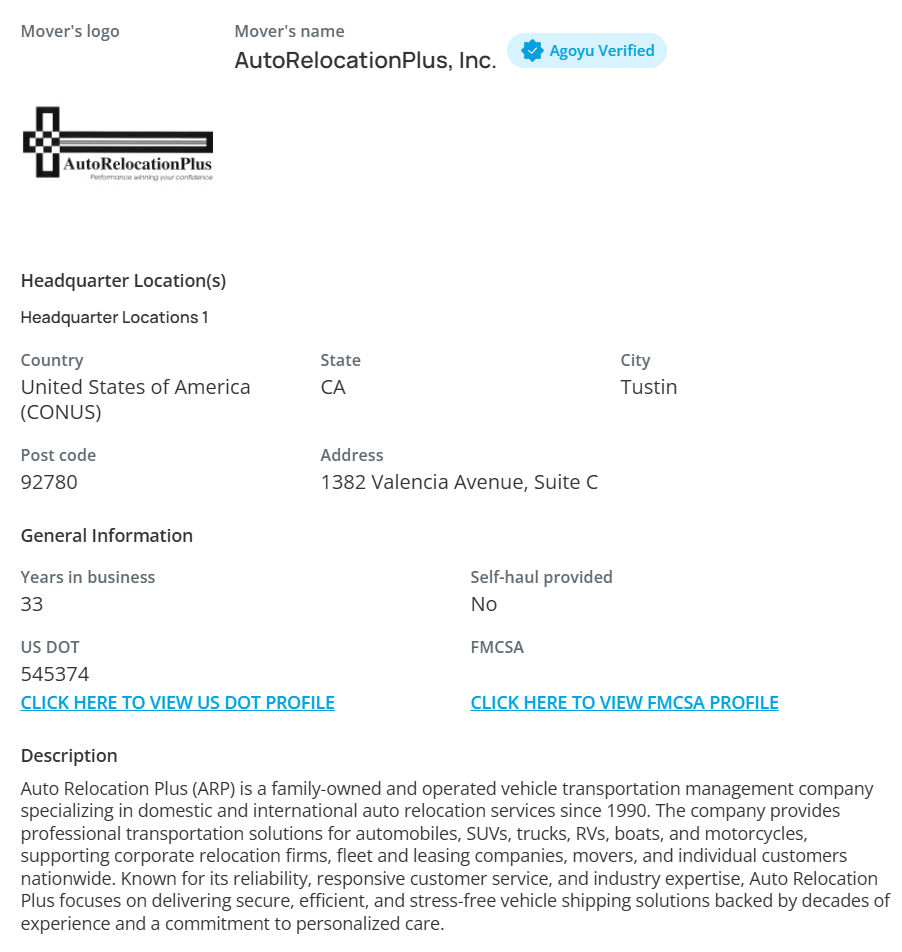
Agoyu is a free moving platform that uses AI to help inventory your belongings and quickly connect you with competitive moving quotes. Scan the rooms in your home with your phone, build your moving inventory, and compare moving options without calling companies one by one.

Agoyu’s technology identifies household items and creates the inventory information movers need to estimate your move. You can then compare available moving companies and quotes in one place.
It’s free for consumers and eliminates much of the repetitive work traditionally required to price a move.
That’s particularly helpful if part of your Boeing relocation assistance comes as cash. Knowing what qualified movers will actually charge can help you avoid overspending on household transportation and preserve more of your relocation money for housing, storage, travel, and other expenses.
If Boeing is arranging and paying for your household-goods shipment directly, follow the company’s relocation process rather than independently booking another mover.
Does Boeing Pay for Temporary Housing?
Temporary living assistance is one of the relocation benefits Boeing says may be provided to eligible employees.
The exact arrangement will depend on your relocation program.
You may receive temporary accommodations, a benefit intended to offset eligible temporary living expenses, or another form of assistance. The length of the benefit can also vary.
Before arriving at your destination, ask:
- How long is temporary living assistance available?
- Who books the accommodations?
- What type of accommodations qualify?
- Is there a nightly or total spending limit?
- Are eligible family members included?
- Can the temporary living period be extended?
- What happens if permanent housing isn’t ready when the benefit expires?
Having those answers before the move can prevent an unexpected housing expense later.
Does Boeing Pay for Movers?
Boeing specifically identifies household-goods shipment as a potential benefit for eligible employees.
Depending on your relocation program, professional moving services may be arranged through Boeing’s relocation process.
This can represent a significant financial benefit. A long-distance household move can cost thousands of dollars, particularly when professional packing, transportation, storage, or specialty items are involved.
Before hiring anyone independently, determine how your household-goods benefit works.
If Boeing requires you to use a designated moving provider, follow that process. If you’re instead responsible for arranging the move and paying from a cash allowance, compare multiple quotes before committing.
Does Boeing Pay for House-Hunting Trips?
Some eligible Boeing employees can receive paid time away from work for house hunting as part of an authorized relocation.
That doesn’t automatically mean every expense associated with a house-hunting trip is covered. Time-off benefits and reimbursement of airfare, lodging, meals, rental vehicles, and other travel expenses are separate questions.
Check your relocation documentation to determine what your particular program provides.
If you’re planning to purchase a home, it’s also a good time to investigate the ARC Realtor Rebate Program. Registering before selecting an agent can allow ARC to connect you with a real estate professional in your destination and establish your eligibility for a potential rebate.
Does Boeing Help With Buying or Selling a Home?
Real estate benefits can depend on the Boeing relocation program you’re offered.
Boeing maintains different relocation programs for employees at different levels and for certain new-hire categories, so don’t assume another employee’s home sale or home purchase benefits will apply to you.
Before listing your current residence or hiring an agent in your destination, ask your relocation specialist about any procedures you’re required to follow.
This is especially important because corporate relocation programs can have rules regarding approved agents, referrals, appraisals, home marketing, or other aspects of a real estate transaction.
If your Boeing benefits allow you to use an outside agent referral program, ARC’s Realtor Rebate can provide another opportunity to reduce the overall cost of your relocation.
Does Boeing Pay to Relocate Your Family?
Benefits for accompanying family members can vary based on the applicable relocation program.
If you’re relocating with a spouse, partner, children, or other dependents, don’t assume their expenses are automatically included simply because you’re eligible for relocation.
Ask specifically about family transportation, temporary accommodations, house-hunting travel, and any other benefits that could be affected by the number of people moving.
The answer can significantly change your overall relocation budget.
To find qualified and pre-vetted movers to help your family with the relocation, use the free Agoyu moving app to get accurate moving quotes from movers near you.
Does Boeing Offer International Relocation?
Yes. Boeing maintains relocation and assignment programs for international moves.
International relocation is considerably more complicated than moving between two U.S. cities. Immigration, work authorization, household-goods shipment, international taxes, housing, family considerations, and cultural adjustment can all become part of the process.
Boeing’s relocation resources distinguish between short-term and long-term international assignments, which is another indication that benefits can differ substantially depending on the nature of the move.
If your Boeing position requires an international relocation, ask for the complete applicable assignment policy before making plans.
Pay particular attention to immigration assistance, travel, housing, household-goods shipment, dependent benefits, taxes, medical coverage, transportation, and what happens at the end of the assignment.
Are Boeing Relocation Benefits Taxable?
Taxes are an important consideration when evaluating any employer relocation package.
Under current U.S. tax rules, many employer-paid relocation expenses for civilian employees can be treated as taxable compensation. That means the stated value of a relocation benefit and the amount you effectively receive after taxes may not be the same.
How Boeing handles those taxes can depend on the relocation benefit and applicable program.
Ask your relocation specialist:
- Which benefits will be reported as taxable income?
- How will taxes be withheld?
- Is the miscellaneous cash allowance taxable?
- Does Boeing provide tax assistance for any relocation benefits?
- How will company-paid moving services appear on your tax documents?
For advice about your individual tax situation, consult a qualified tax professional.
Do You Have to Pay Back a Boeing Relocation Package?
Your relocation agreement may include repayment requirements if your employment ends within a specified period.
These provisions are important because the total value of a relocation package can be substantial, particularly when Boeing is paying for professional movers, temporary living, travel, and other benefits in addition to a cash allowance.
Read your relocation authorization and employment documentation carefully before accepting.
Look for:
- How long you must remain employed
- What events can trigger repayment
- Which benefits are included in the repayment obligation
- How company-paid services are valued
- Whether the repayment amount decreases over time
- Any exceptions to the repayment requirement
- How taxes are handled if repayment becomes necessary
Don’t rely on another Boeing employee’s repayment terms. The agreement attached to your offer is what matters.
Who Qualifies for Boeing Relocation Assistance?
Boeing relocation assistance is tied to eligible positions rather than being automatically available to everyone.
Boeing’s career information specifically tells applicants to check the individual job description to see if relocation benefits are provided.
Current Boeing job listings also make relocation assistance a searchable category, with positions across engineering, management, software, systems, manufacturing, and other areas potentially qualifying.
New hires can qualify, so you don’t necessarily need to work for Boeing for a particular amount of time before receiving relocation assistance.
Boeing’s own relocation materials distinguish among new college graduates, professional and critical-skills new hires, managers, current employees at different levels, temporary assignments, and international assignments.
If you’re applying for a position that requires a move, discuss relocation before accepting the offer.
Can You Negotiate a Boeing Relocation Package?
It’s worth understanding the complete package before deciding whether additional assistance is necessary.
Start by finding out which Boeing relocation program applies to you and what it already provides. A package that includes household-goods shipping and temporary living assistance has a very different value from a cash-only offer.
Questions worth asking include:
- Is household-goods shipment included?
- How does the miscellaneous cash allowance work?
- How much temporary living assistance is available?
- Is house-hunting travel covered?
- Do I receive paid relocation time?
- Are spouse or dependent expenses covered?
- Is vehicle transportation included?
- Are storage expenses covered?
- What real estate benefits are available?
- Which benefits are taxable?
- Is tax assistance included?
- What repayment requirements apply?
- When do the benefits expire?
If your actual moving expenses exceed the assistance being offered, having specific estimates can make the conversation much more productive.
How to Make the Most of Your Boeing Relocation Package
The first step is separating company-paid services from expenses you’ll need to fund yourself.
If Boeing is paying your household-goods carrier directly, don’t count that expense against your miscellaneous cash allowance. If temporary living is also provided separately, factor that into your budget before deciding how much money you need for housing.
Next, determine the actual cost of the major expenses you’re responsible for.
If you need to arrange the move yourself, compare moving quotes through Agoyu. If you’re buying or selling a home and your relocation rules permit it, investigate the ARC Realtor Rebate before choosing an agent.
Then create a reserve for expenses that are harder to predict. Storage, utility deposits, pet transportation, replacement household items, temporary transportation, additional housing days, and other costs can add up quickly.
Most importantly, follow Boeing’s relocation procedures. Corporate relocation benefits can come with specific requirements, and booking services independently before checking the policy could affect what Boeing will pay.
Preparing for Your Boeing Relocation
A Boeing relocation package can provide substantial support when accepting a position that requires a move. Boeing confirms that eligible employees may receive benefits such as household-goods shipment, temporary living assistance, and a miscellaneous cash allowance, and its relocation programs vary according to the type of employee and assignment.
That makes your individual relocation authorization more important than any dollar amount or package description you find online.
Before moving, understand what Boeing is arranging, what you’ll need to arrange yourself, how long your benefits last, how taxes are handled, and what repayment obligations apply.
Then look for opportunities to make the resources available to you go further.
Buying or selling a home for your Boeing relocation? Register for the ARC Realtor Rebate Program before choosing your real estate agent to find out how much cash back you may qualify to receive.